The showman gives you front row to his heart
The showman prays his heartache will chart
Making a spectacle of falling apart is
Just the start of the show
– U2
I think I saw it today. “My farmhouse.” The inspiration for the ghost story, “Eight for a Wish, Nine for a Kiss.”
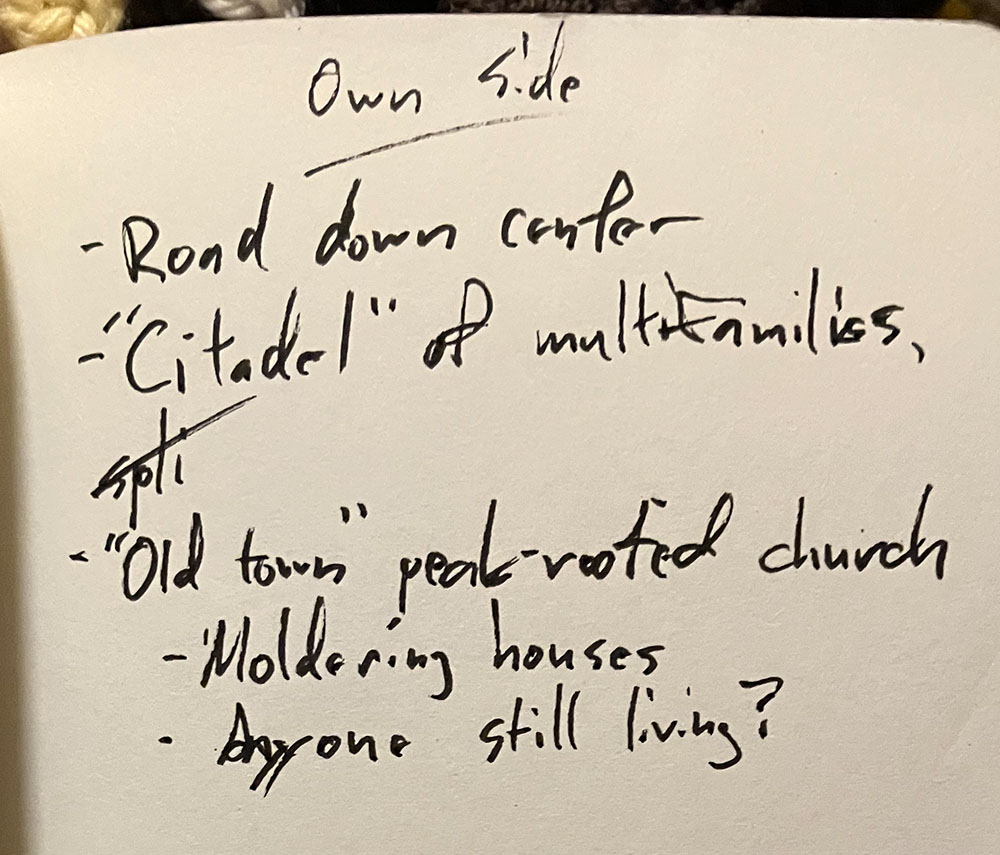
Recently my wife, son and I took a short bike ride to see a house for sale in the village of Kasted. I hadn’t previously been aware that there was a village in that valley, so close by that Hugin would still be going to the same school. Settlement patterns being different here, Kasted turned out to be a riot of old houses, surprising in both their number and urban closeness, despite lacking even a bus service. It was a Lego shelf neighborhood, tucked invisibly into a fold in the cultivated hills. (The house was charming downstairs, but a money pit upstairs.)
Today, I took the morning off, and for reasons unknown went past Kasted again. I climbed slowly up the other side of the valley along Revelhøjvej. There are plenty of evocative old buildings along that route. Many genial newer ones. There’s a burial mound. My farmhouse isn’t there.
There is a modern-ugly white, sprawling farm compound with an orange-roofed barn, far up the hill from the road. I can find it on Apple Maps. Far from my route, and even the western road through Kasted, the driveway appears to split off directly from suburban Tilst (well hidden behind a sharp crest in the hill and a sheltering line of trees).
The farmhouse always existed only in my mind, as the story shouldn’t be taken as blandly autobiographical. Yes, there’s a lot of me, and a lot of my pain, poured into it. The isolation of parental leave is something I didn’t anticipate. (As an American, accustomed to none or next to it, that statement feels painfully spoiled.) The first year as parents is hard on most couples. No pain or difficulty could dispel the joy of being Hugin’s father, but my god does it try.
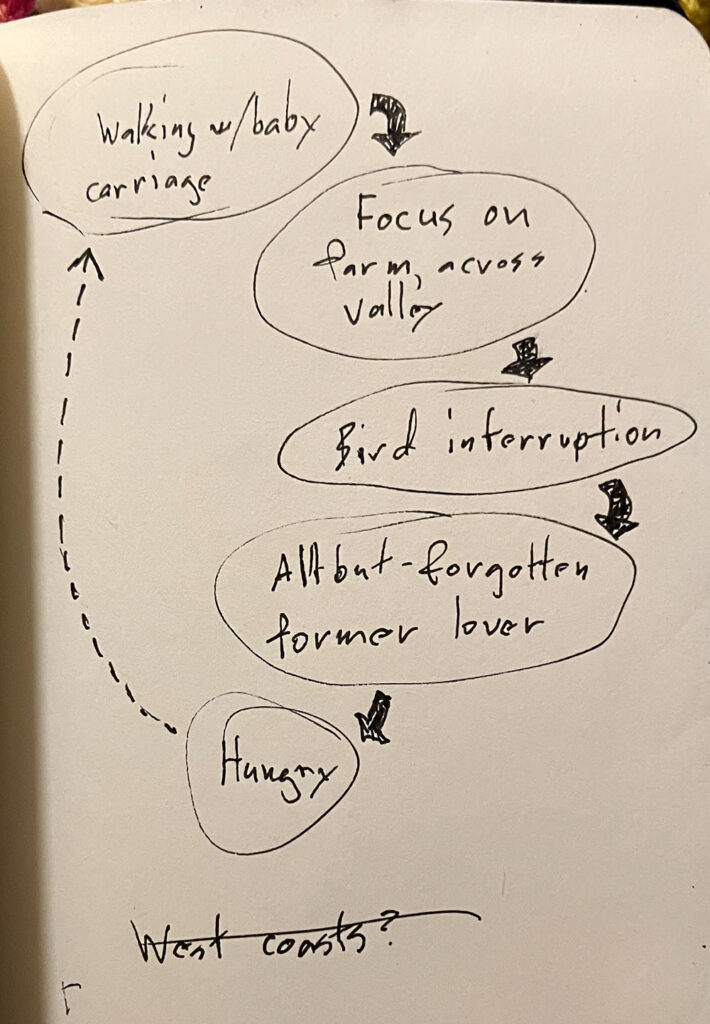
“Eight for a Wish, Nine for a Kiss” was basically two story ideas joined into one, a technique I’ve found to produce interesting results before. The farmhouse, of course, was real, visible, and liminal all at once, as I pushed baby Hugin around hilltop suburb-to-be Lisbjerg. I’d been reading Yeats’ The Celtic Twilight and his collaborator Lady Gregory’s more focused but repetitive Visions and Beliefs in the West of Ireland, as well as John Keel’s brilliantly written (if full of it) The Mothman Prophecies.
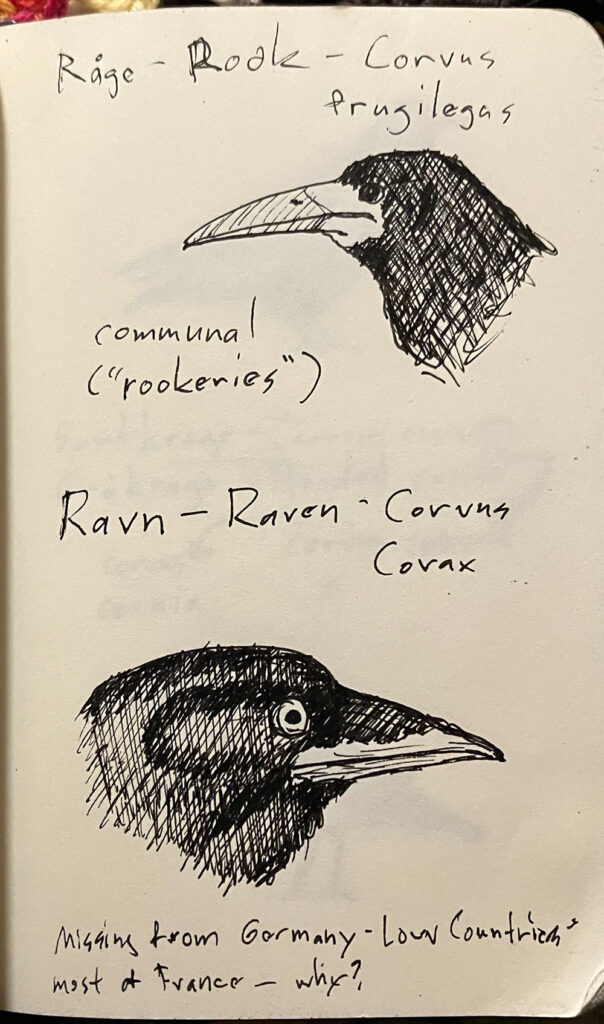
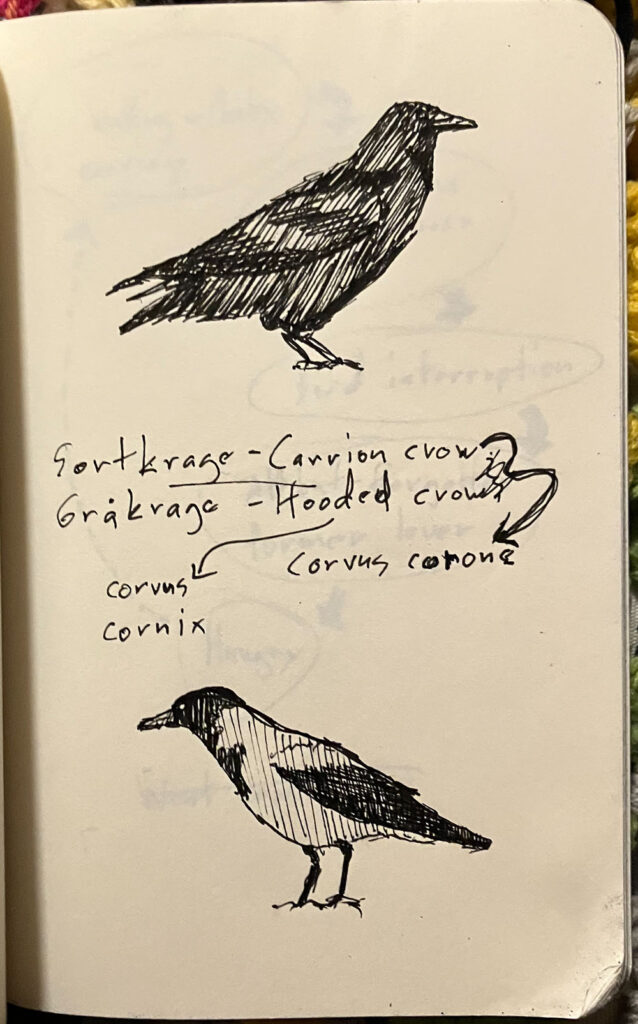
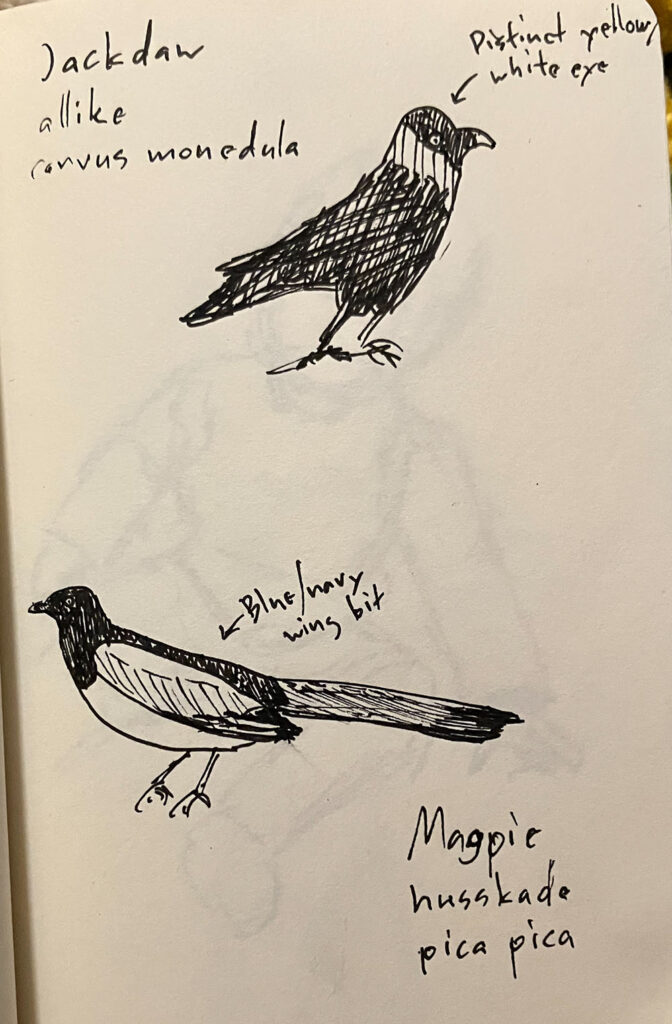
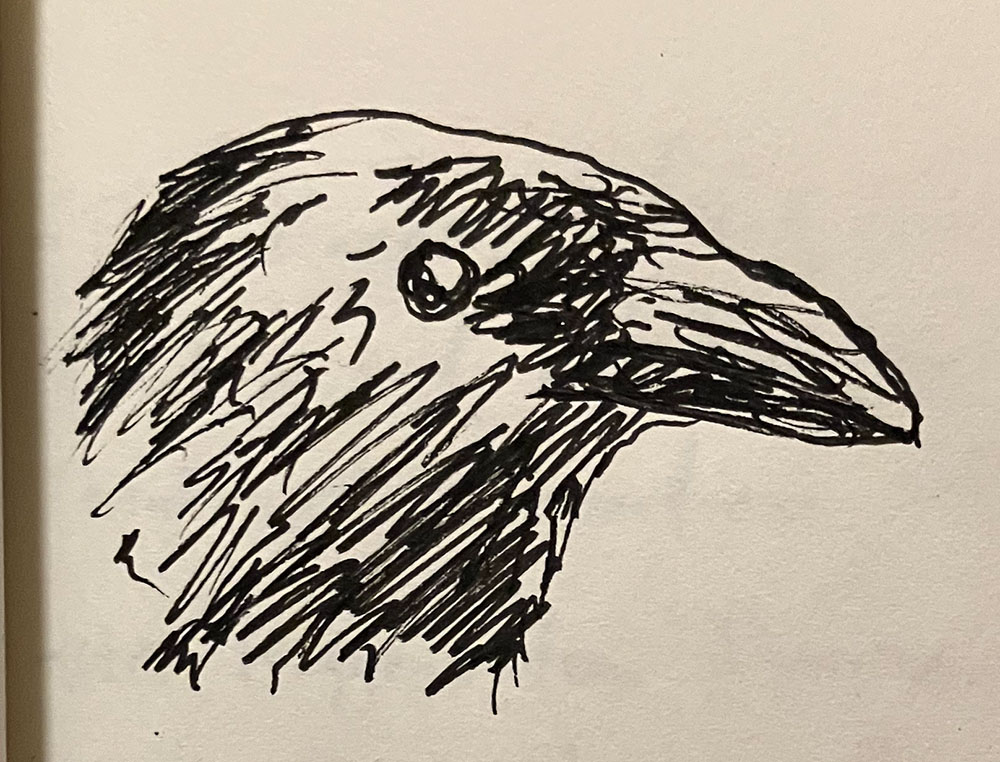
The corvids simply felt right, as a Symbolist-style personal token, as a mythological element, and as a tribute to Hugin, named for one of Odin’s two ravens. These, Hugin and Munin, are usually translated as “thought” and “mind,” but our sources are so limited we need to accept some speculation. (My suspicion is that Hugin meant something more akin to “will,” the ability of the mind to affect change in the world.) Counting Crows fans will remember the 18th Century (or older) English rhyme which, uniquely, both lent the band its name and serves as the bridge to the song “A Murder of One” —
One for sorrow,
Two for joy,
Three for a girl,
Four for a boy,
Five for silver,
Six for gold,
Seven for a secret never to be told.
A variant, collected in Lancashire, goes a bit farther, and lends my story its wordy title:
Eight for a wish,
Nine for a kiss,
Ten a surprise you should be careful not to miss,
Eleven for health,
Twelve for wealth,
Thirteen beware it’s the devil himself.
Originally the rhyme was about counting magpies, not crows. You can try it, but magpies being rather solitary, I often find myself stranded at sorrow.
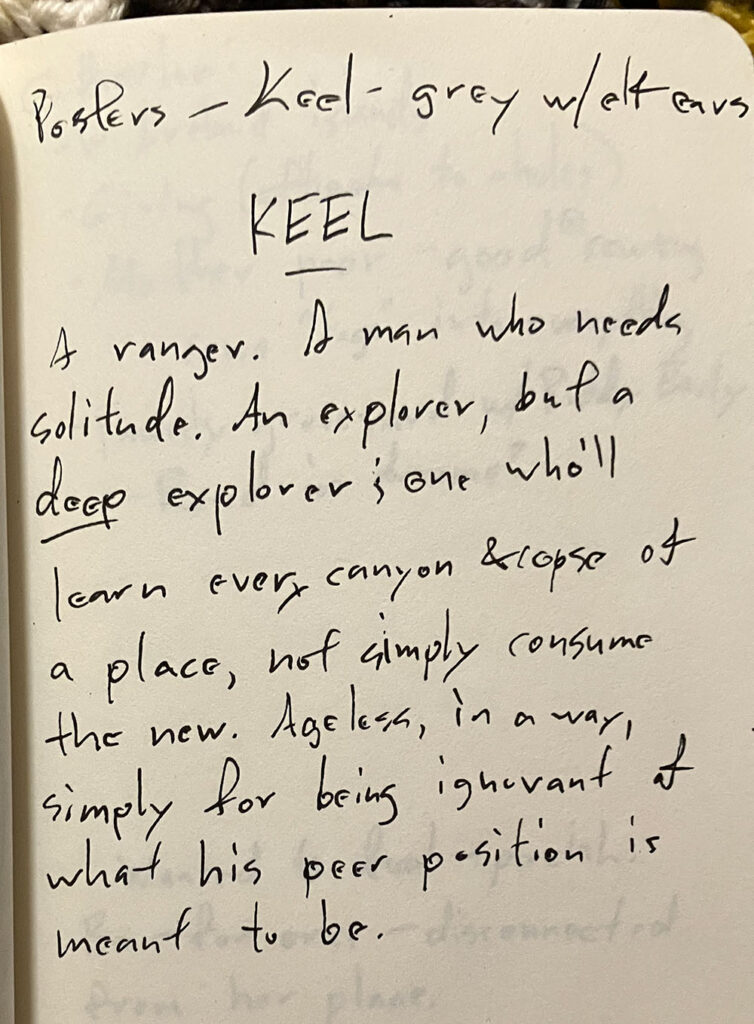
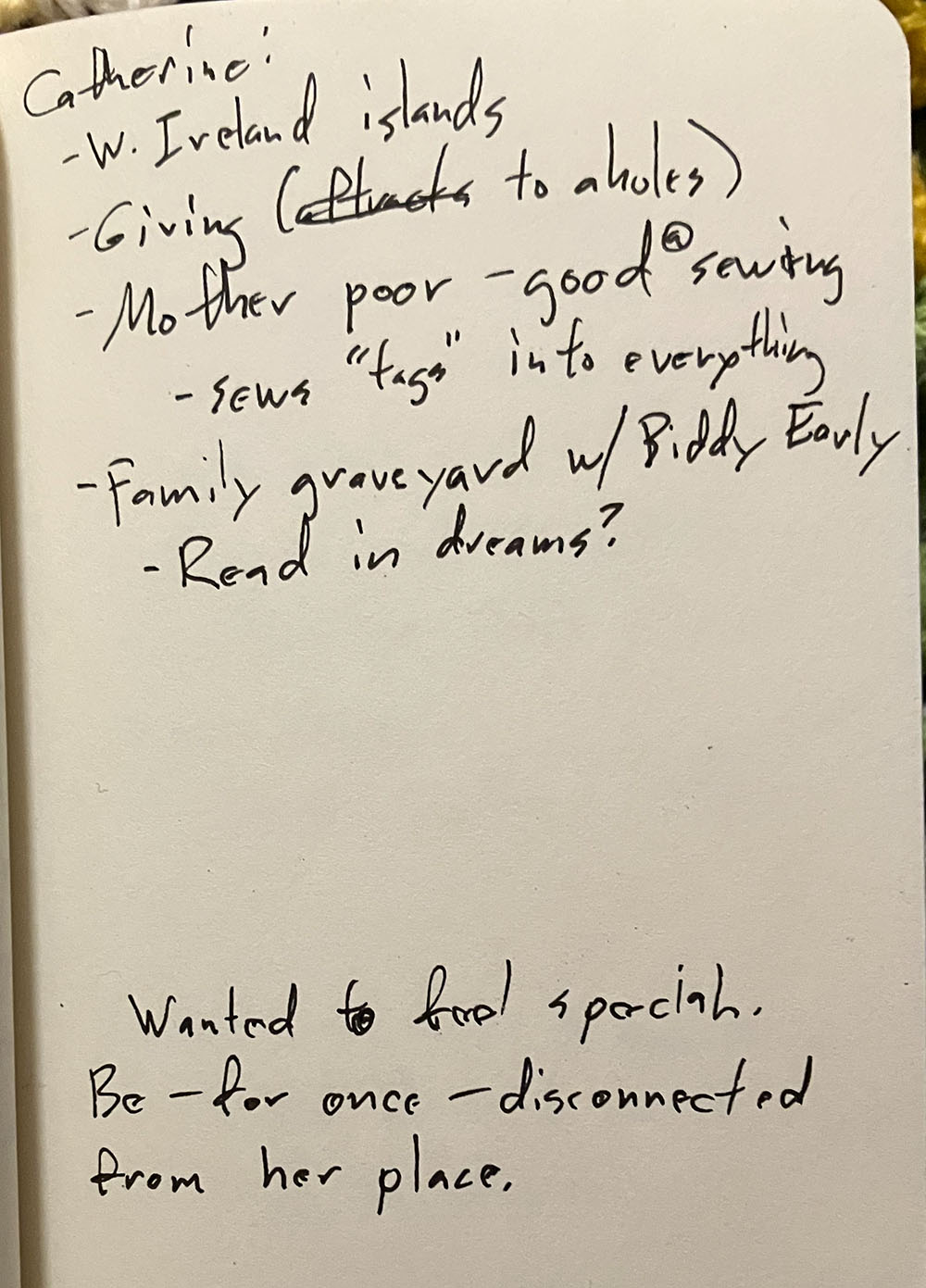
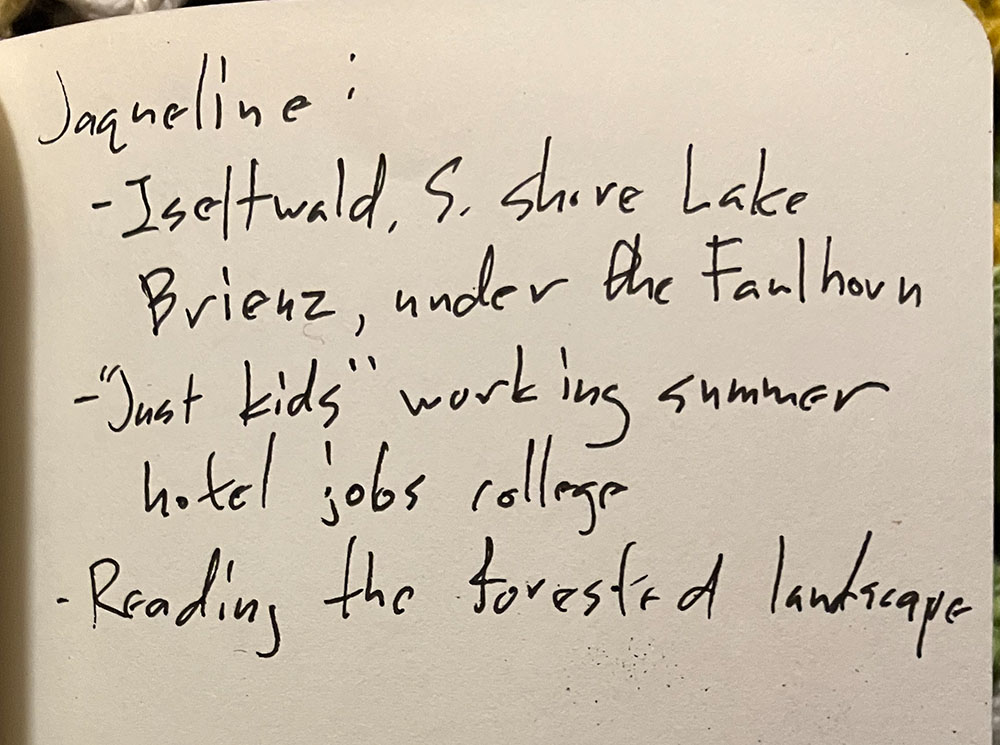
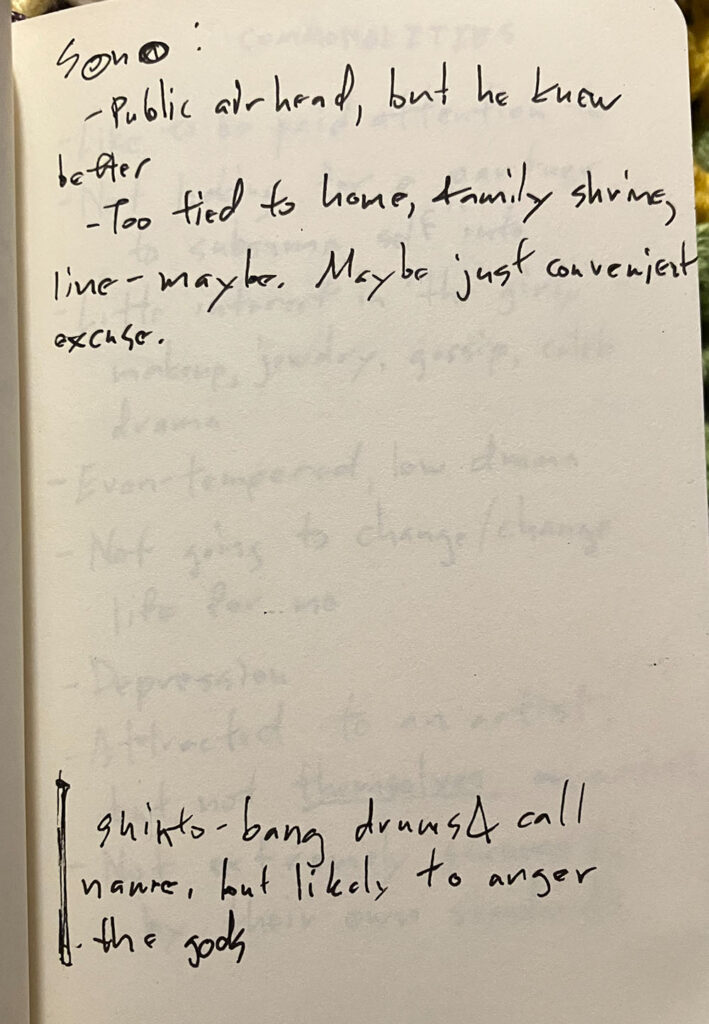
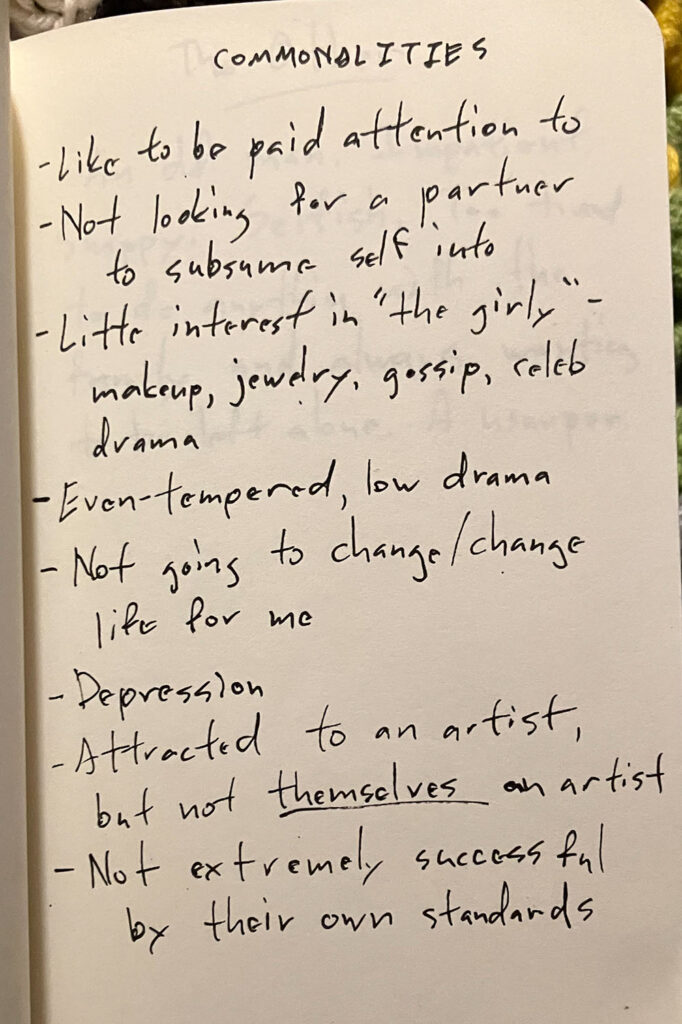
Messy notebook pages follow.