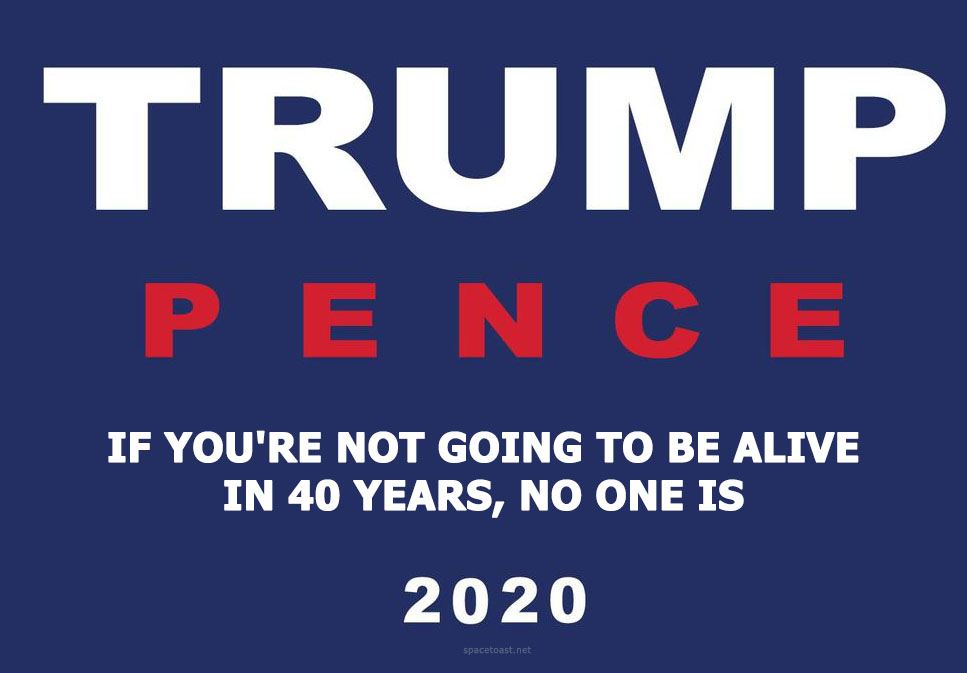
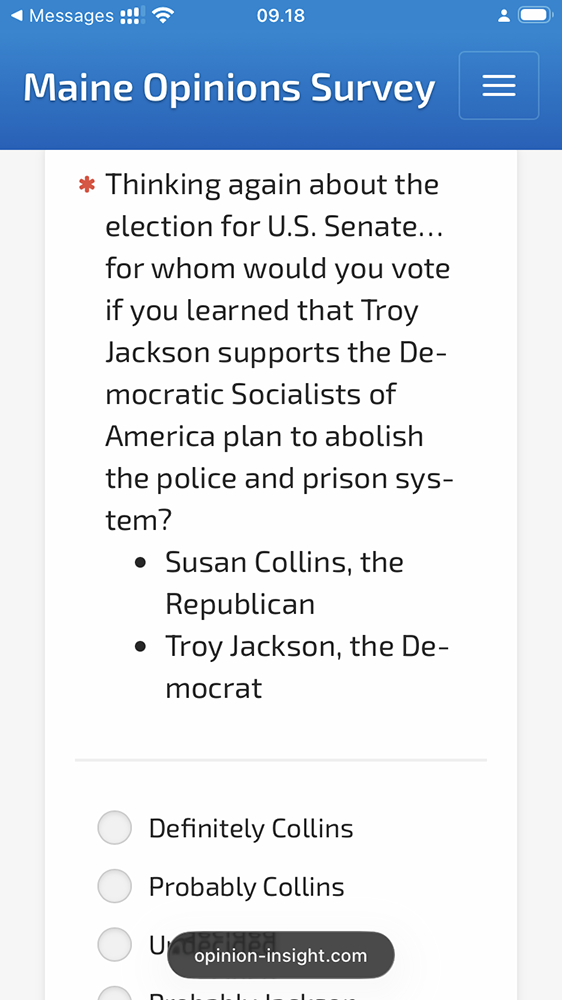
If You’re Wondering Why Polls Don’t Work in the US Anymore

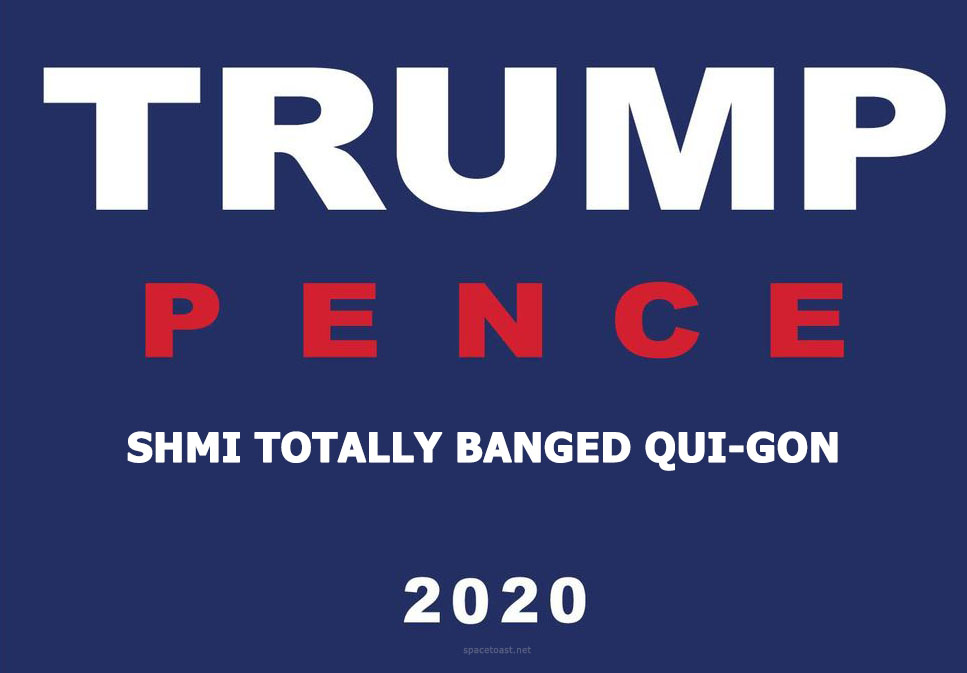
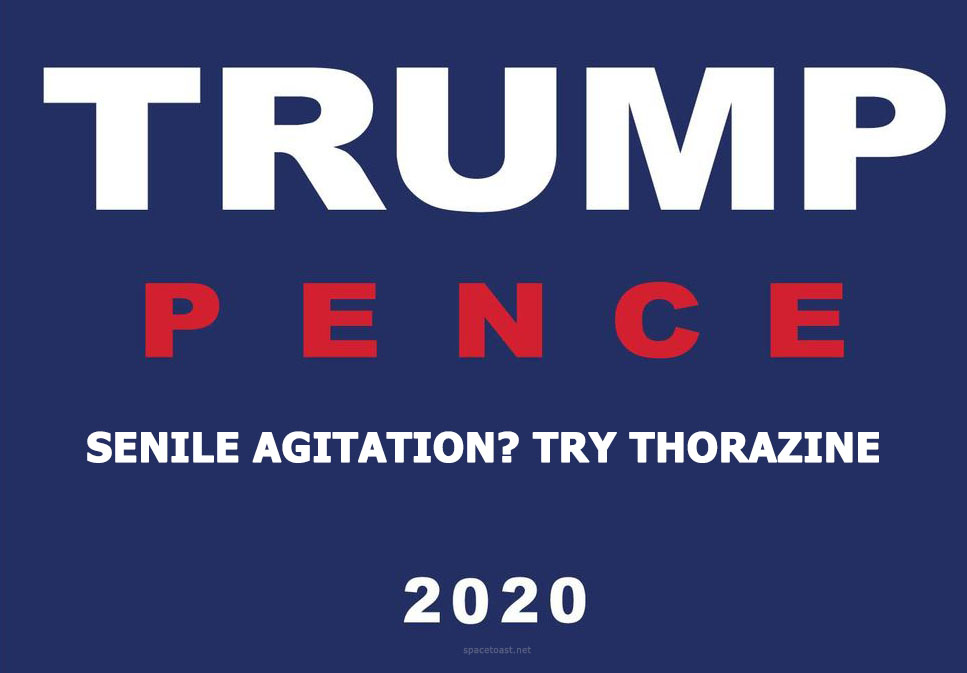
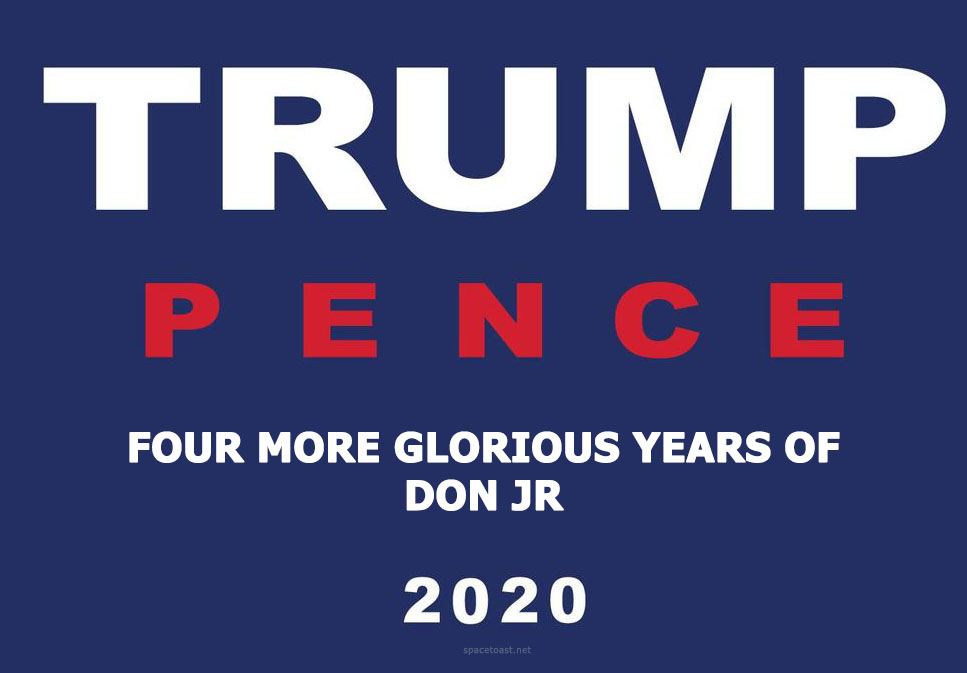
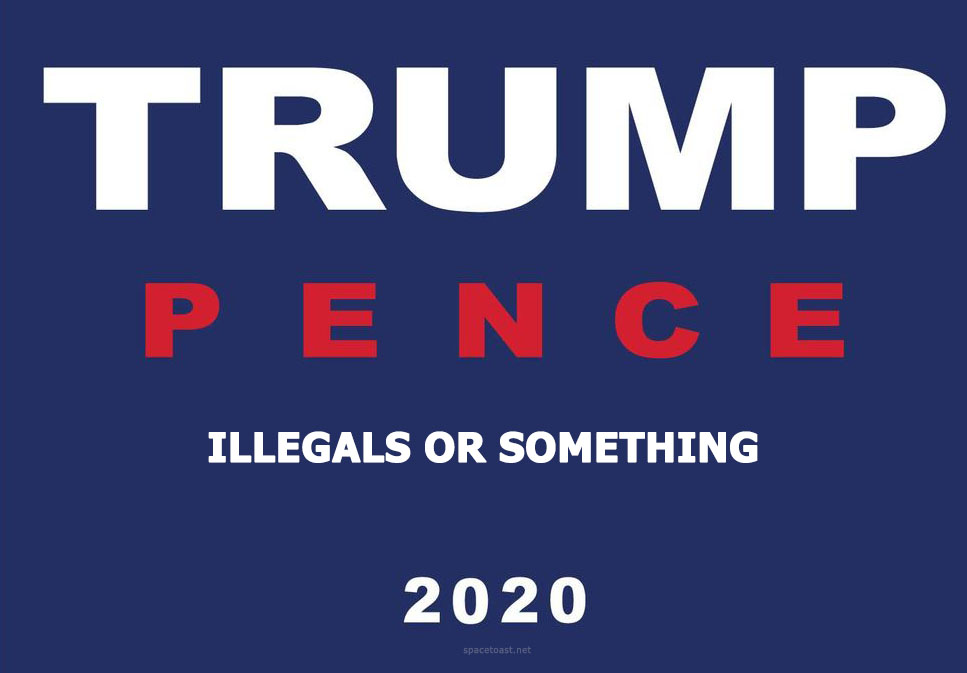
…it’s because of garbage push polling like this.

It’s a garbage company out of Florida (naturally) that runs research-polls.com, opinion-insight.com, research-opinions.com, and likely others. The garbage company’s outdated copyright notice identifies it as Research-Polls, as do their text messages.

Collins, for whom I’ve voted in the past, is a once-reliable moderate who voted first to confirm manifestly unqualified candidate Brett Kavanaugh to the Supreme Court, and then anti-health crank Robert F. Kennedy Jr. for United States Secretary of Health and Human Services, and Project 2025 hatchet-man Russell Vought to the Office of Management and Budget. When History called, she failed, and must be retired.

Troy Jackson, meanwhile, A) isn’t in Donald Trump’s party, B) has a pulse (presumably), and C) isn’t Senator Collins. He also, D) Hasn’t insulted my intelligence with a push poll today. If he supports police and prison reform, he’ll also be showing a bit of spine (not to mention fiscal responsibility) in a country addicted to failed policies dating to the Victorian Era. (Beyond that, I can’t find any kernel of truth in this garbage push poll question.)

So, come November: garbage out.

Surveillance Parenting

“Its malevolent gravity drags humanity and all human ideas into its orbit, warping them beyond recognition. Beneath it, within its context, everything becomes corrupted into the worst version of itself. It takes joy and turns it into vindictive glee; it takes self-reliance and turns it into solipsistic psychosis; it turns love into smothering assault, pride into humiliation, families into traps, safety into paranoia, peace into discontent. It turns people into people who do not see people as people. And civilisations, ultimately, into abominations.”

-Sam Hughes, There is No Antimemetics Division

This is the moment when Hughes’ novel, I think, reaches beyond high-concept pastiche to truly touch something great. An idea, a meme, so all-encompassing that it doesn’t merely pervade and rot everything it casts its dark light on, but replaces the whole with a new always-was.

My son is a year and a half old. I’m 45. I’m a different generation than most of my peer-dads. My memetic space is different. My inevitabilities are different.

The technology now exists to “watch” Hugin everywhere he goes. To know everything he reads, watches, plays, experiences. Because WHAT IF THE WORST HAPPENED? Knowing I could have reached for that golden bough, had the knowledge to prevent the worst–and didn’t. What would that make me?

Hugin scraped his knee so it bled, and got a real prize shiner on his forehead, all today. Since daycare. In my care. My philosophy is: cool, good. You should see him climb! He’s an explorer. He’s a mover. He’s a ponderer. He’s a sweet guy. And he’s going to have worse.

We wandered dumbly into surveillance capitalism. A pack of lies from marketing scum sold the world its panopticons: It’s free because your privacy is worth nothing! Simultaneously: With enough data, we can sell people anything! It wasn’t true in either direction. But if we’ve learned anything from Trumpism, it’s that true is a far more fragile and optional meme than a refugee from the 20th Century would have assumed. Easy is a meme. Everyone else does is a meme. I’m busy is a meme. Stressed. I can do this. I can get out of this hole. I just need a little space. There are so many memes louder than true. Surveillance is a legitimate business. That’s a meme.

Like every child, Hugin stands where a torrent of historical winds cross.

I will protect him. I must protect him. To both statements, sometimes yes, but primarily I must raise him.

Previous generations weren’t as free as we assume. Yes, as a child in the 1950s-60s, my mother could go several streets in any direction with her friends, but everywhere was a loose network of housewives and old ladies who knew one another, had their phone numbers handwritten in the back of one-another’s white pages, and kept a keen eye on everyone’s children throughout the day. (My dad, in a much smaller town: Fewer checkpoints, larger geography, same vague system.) My parents always needed to know whose house I was at, in the 1980s-90s (though it helped that they needed to drive me there until 1996).

The difference in the 2020s is twofold.

First, the granularity has increased extraordinarily. My parents couldn’t even see what I checked out from the school library. Parental controls will literally show me everything Hugin examines. The power is heady. The power is corrupting. The power tries to keep a straight face as it smirks, “What if?” That infrastructure wasn’t built for the benefit of my son; it was built for the massive collection and collation of his thoughts. Initially, to sell him things. Now, to shape those thoughts. Have I mentioned that surveillance capitalism is now politics?

The second difference is, in fact, worse. The second difference is internalization. The meme is no longer a meme, it is the whole memetic space. Have you noticed you can now tell the age of someone online by the circumlocutions they use to allude, even vaguely, to anything serious? Suicide, rape, death, sex. Everything is autocorrected away before it even gets from Millennial/Gen Alpha fingers into the device. They are so used to being watched in every space in which they can communicate, at least by a lazy bot, that they self-censor as a reflex, like Soviet peons. (I fear it’s even deeper. I see suggestions that the surveillance-native feels that their inner thoughts are public. The sleepless imperfections of the new parent are pathologized. The schoolgirl crush on a teacher is pathologized. The teenage boy wanting to see nudity is pathologized. Every inner rebellion must be quelled. God I hope I’m wrong.)

This is where ChatGPT would start talking solutions. ChatGPT can fuck off. Free Range Kids has failed as badly as the Sceptics Movement. I don’t know (unintentional Howard Beale voice) what to do. I don’t know what I must do. I only know that we need to name this abomination, give it metaphysical form, before we can manage it. We need to see the meme for what it is: Another flimsy spinning thing of money, monomania and anxiety, demanding to be treated as inevitable, re-internalized, and forgotten.

We need to accept the memetic version of those skinned knees and bonked heads. We need to do better in our own framing of the problems our children face. Giving in to anxiety is just… so… easy now. Dress it up as righteousness, and you never have to think about it again. Perfect.

Or we can parent these amazing kids the hard way. Whatever the fuck that is.

True Horror Subgenres

In the last entry in this series, we defined True Horror genetically. Here we look at its children. Basic genre hybrids like Scifi Horror are out of scope.

Something needs to be set down in writing here: Not being True Horror does not make a work bad. Social media is for rage-bait; this is a blog. Sax Rhomer’s Occult Detective book The Dream Detective is a fun and fascinating work. It’s not True Horror, but so what? No one needs another tutting inner critic.


The Aickmanesque (1960s-1970s) Robert Aickman and Elizabeth Jane Howard resurrected the traditional English Ghost Story along Symbolist lines, creating a distinct form unaccountably disturbing from an inner perspective.

Body Horror (1980s-) Generally credited in its modern horror form to Cronenberg, the subgenre dealing most directly with alteration to the human body, often against one’s will.

Cosmic Horror (1920s-1930s) The most direct attempts to continue in Lovecraft’s style. Blood and violence are largely offscreen, implied or irrelevant, while the insignificance of humanity in a larger order is centered. A narrator lives to tell the tale, carrying an awful burden. Prose are often purple (in imitation of Lovecraft’s imitation of Poe).

Cozy Horror (1970s-) Horror in which the key elements are at an extreme remove, often shrouded in ambiguity, and human slice-of-life storytelling takes center stage. A controversial classification supported by works like Gene Wolfe’s Peace and the art of rt0no.

Folk Horror (1970s-) An expression of the simultaneous fascination and alienation outsiders hold with the perceived generational continuity, insularity and memetic survival of isolated rural regions. (Outsiders include those from different rural regions.) Generally descends from Margaret Murray’s once-popular witch-cult hypothesis.

Possession (1970s-1980s) An often quite conscious attempt to literally scare people back to religion. The universe is immoral and unknowable if one does not follow.

Psychological Horror (1960s-) Often confused with Psycho-thrillers. To fall within True Horror, the loss of touch with reality at the core of the work must rise to the level of the (implied) supernatural.

Slasher-Horror (1970s-1980s) In its hyphenated form, a Slasher in which the killer is (or killers are) implied to possess invulnerability, omniscience, precognition or other impossible attributes.

Vampire (1910s-2010s) The depredations of the ruling class, often mixed with nativism, at a remove. Coalesced initially from a variety of loosely-related Eastern European folklore traditions, and contemporary anxieties around tuberculosis.

Zombie (1960s-2000s) The only way modern pop culture can deal with the specter of societal collapse. Other desperate human beings are transmuted into mindless, soulless Others, to forgive–even make sport of–their slaughter.

The Strict Definition of Horror

Horror’s long story is about mixing bloodlines, fuzzy edges, mistaken identities and schismatic reformers. This is the short one.

We’re here to define it. Genetically.

Why bother, if everyone’s having fun? When anything can be Ø, Ø means nothing. Mixing genres is fun, but if the writer doesn’t understand, respect, even know what they’re mixing, the middle falls out.


The Ancestors

Genres never die, they just turn retro. The (-dates) here aren’t when the genre stopped being executed, they’re when it stopped being innovated.

Fairytale (-1800s) bizarre, usually chainable supernatural oral tales told for pure entertainment, sometimes with a moral element. The end of this tradition comes with late-18th-19th Century attempts to catalogue them, as by the Brothers Grimm, Giambattista Basile, Charles Perrault, etc.

Romance (1300s-1700s) a literary immitation of Fairytale, often told as a first-person narrative–though not meant to be believed by the hip reader.

The Gothic (1600s-1800s) a highly moralized narrative of a virginal character thrust into a dark world. The tension is between the twin human desires to see the innocent preserved and ravaged.

The Grotesque (1840s-1880s) Poe’s groundbreaking step beyond the Gothic form, focusing on a sensation of revulsion, often as much spiritual (and psychological) as physical. Frequently the terminal experience documented.

Symbolist Fiction (1880s-1910s) the uncanny suspension of the world’s logic in pursuit of a felt–rather than enumerated–psychological understanding. Robert Aickman would later take up this thread and merge it with the traditional English Ghost Story.

The Decadent (1870s-1890s) a self-consciously giddy extrapolation of Poe’s Grotesque into an unburdened world of excess, decay and dissolution for their own sake.

Sensation Fiction (1860s-1930s) melodramatic Victorial pulp meant to unsettle the middle-class Victorian reader with taboo topics. The mantle was taken up onstage by the Grand Guignol’s (generally social realist) plays leading to tragic and violent endings; extravagently crafted, their climactic bursts of mayhem were a draw in and of themselves, in the manner of a Grotesque.

The English Ghost Story (1600s-1800s) focused heavily on the experience of the unknown, with a moralizing core. Wounded by the concretizing of formal Occult Fiction in the later 1800s, but revitalized near the emergence of the Weird by M.R. James.

Occult Fiction (1860s-1910s) a proto-science-fiction dressed up as Ghost Story, from a milieu in which literal communion with the dead was believed to be both possible and imminent. Often mixed with the (out-of-scope) Detective genre, also innovated by Poe.

The Weird (1910s-1930s) Lovecraft’s attempt to unify certain strains of contemporary supernatural fiction into a cohesive genre, from which his fixation on human insignificance birthed True Horror. (Science Fiction and Modern Fantasy, both out of scope here, also emerged from The Weird.)

Often Confused

Thriller (1910s-) modern Sensation Fiction, dealing with extraordinary but non-supernatural occurrences such as murder, pursuit, threat and disappearance.

Torture Porn (1970s-2010s) a melding of Thriller and Poe’s Grotesque.

Slasher (1970s-1980s) a blood-soaked form of Thriller, in which the focus is on the violent deaths of the characters by human hands.

Ero Guro (1960s-) Japan’s answer to Slasher, focusing more on sexuality and warped morality than pursuit and murder.

True Horror

True Horror (1920s-) the genre of fiction birthed by Lovecraft, featuring a focal supernatural element (real or perceived), and an indifferent universe in place of a moral one. The emotional effect moves between fear and horror. The True Horror story crystalizes in the moment of realizing one has been wrong.

On the Election Loss

It’s been a long day. With respect to the feelings of many people I care about, Trump is not a win for America. You may not think so, but I’ve been listening to you all along. I’ve been listening, but you haven’t fulfilled your end of the bargain—you’ve neither listened, nor had anything much to say.

There’s been no “smear campaign:” We’ve only taken Trump at his true, in-context, and utterly un-American word. You “feel” that the economy was better under him, while the numbers call it a wash. You believe that crime is rising where it’s falling. The border is such a major issue for you, but when Republicans killed the bill that was everything you wanted because Trump wanted to, quote, “run on immigration,” you didn’t bat an eyelash. You fail to hold Trump to any standards, and while you’ll privately oppose many of his and his cronies’ policies (tax cuts for the rich, money in politics, unfettered corporate power, healthcare, contraception, Ukraine, etc.) you don’t speak out. You won’t speak out. And it’s only going to get harder.

If the last decade has taught us all nothing else, it’s that all expectations are off. The guardrails do not hold. Polling doesn’t work anymore. Reporting doesn’t work anymore. Only bold repetition seems to break through, and that is an idea whose master we do not wish to acknowledge. 

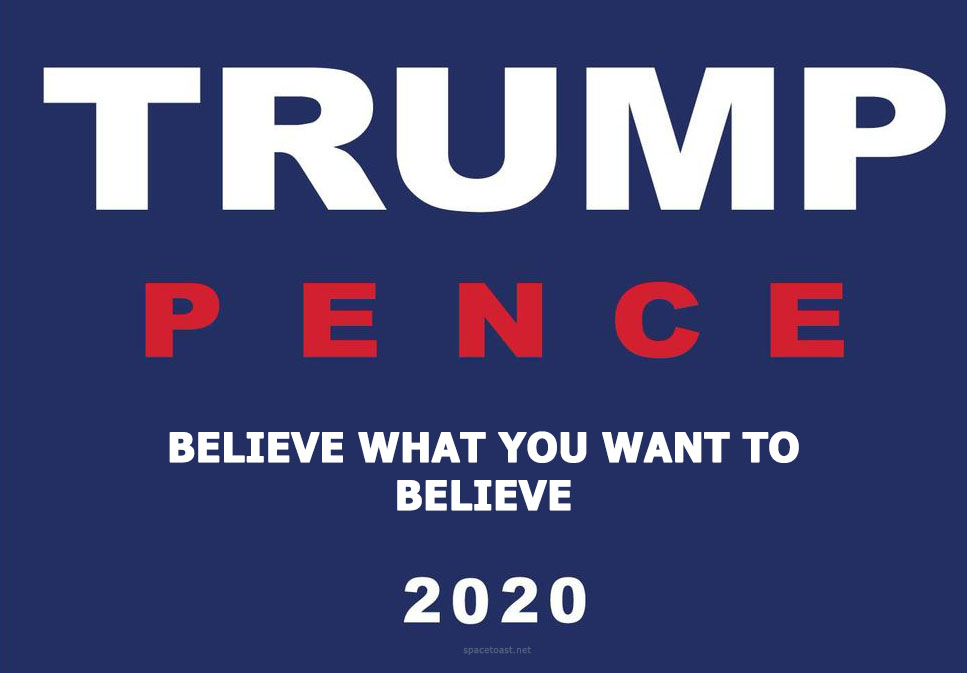
We treat America’s democracy as a thing carved in stone, rather than a gentle flower we must guard. Democracy is a burden, which is why it’s been allowed to fail in so many places, already, in this young century. It’s our burden. But when we allow the information space to, as Steve Bannon recommended, “fill with shit,” we shirk our duties as citizens. And no amount of projection and finger-pointing can overcome the tarnish on your intellectual honor from believing only what you want to believe.

Trump can’t stop lying. He’s in too deep. But whatever of his policies you support, you must not play along. That way lies nothing of honor, value, bravery, or love.

***

These were my thoughts Wednesday, the day after Donald Trump was elected to a second term as U.S. President. They’re messy, but they’re honest.

There is something important I left out, though. I won’t waste your time with paragraph after paragraph. It’s this: Social progress is not zero-sum. Putting in “the leaf” doesn’t make your place at the table any smaller. (And the good man must then ask: What if it even did? What would that change?) Populists have been leading flocks astray with this dead meme for well over a century, that being concerned for someone who isn’t you means not being concerned for you. I have to wonder how small their hearts are. Whatever can be used to “other” one’s fellow man and pretend that they, uniquely, don’t matter, is fair game.

When shamed out, as they always are, they invert the play. They steal the language of those they’d marginalize. It’s the same premise. It’s childish. That someone else has suffered doesn’t imply that you haven’t. That your and your neighbor’s positions are precarious doesn’t mean that you need to find a way to fuck him out of whatever he’s got left.

We’re supposed to be One Nation, and we’ve elected a divider–a man whose chief talents are projection and insults. This is not baseball. Enjoy your truimph, but look forward to the hangover. Whoever won this election, America lost.

The Day I Cancelled Netflix

Wow. 2011. That’s a long commitment. It was a DVD service then. My computer had a slotloader drive. They’d get just about anything you asked for, if you waited long enough.

Then they added streaming. That was fun.

Then they tried to split discs and streaming, and had to do a desperate volte-face.

Eventually, they dropped discs anyway.

Original productions. Some bad. Some great. Most average. Most expensive, until they weren’t. Three seasons of Dark, but 1899 only survived one. The streaming wars peaked. No one could burn money like they used to.

But they were profitable.

And, although profitable, they wanted more.

We all dropped cable, because it cost too much, and was full of loud ads and cheap garbage shows. Then the streamers all… wanted to make cable again.

But this time it’d be 100% vertically integrated. Watch it here, or don’t watch it at all. We hated that, but the suits loved it. Dark again… Dark had the best soundtrack of any tv show to date, but you couldn’t buy it. You had to build it your own damn self.

Rubbish.

Buy a great show, so you could watch it without internet? Forget it.

Rubbish.

And that’s the world–that’s the market Netflix gave us.

They make more per customer if they show us ads. So why not jack the prices up? Again, and again, and again… Finally, they were going to switch us automatically to an ads plan. Or charge more for the same thing. No, not worth it.

2011. Damn. But, money only understands money. Getting it, or losing it.

FAFO.

Umberto Eco on Fascism

It’s worth now revisiting 1995 when Umberto Eco–child of Italian Fascism–explained to us the 14 hallmarks of fascism, be it Italian, German, Spanish, Russian or otherwise: Ur-Fascism. Here’s a gloss in reverse order; ellipses mine, emphasis his.

14. Ur-Fascism speaks Newspeak… All the Nazi or Fascist schoolbooks made use of an impoverished vocabulary, and an elementary syntax, in order to limit the instruments for complex and critical reasoning. But we must be ready to identify other kinds of Newspeak, even if they take the apparently innocent form of a popular talk show.

13. Ur-Fascism is based upon a selective populism, a qualitative populism, one might say. In a democracy, the citizens have individual rights… For Ur-Fascism, however, individuals as individuals have no rights, and the People is conceived as a quality, a monolithic entity expressing the Common Will… Thus the People is only a theatrical fiction… There is in our future a TV or Internet populism, in which the emotional response of a selected group of citizens can be presented and accepted as the Voice of the People… Wherever a politician casts doubt on the legitimacy of a parliament because it no longer represents the Voice of the People, we can smell Ur-Fascism.

12. Since both permanent war and heroism are difficult games to play, the Ur-Fascist transfers his will to power to sexual matters. This is the origin of machismo (which implies both disdain for women and intolerance and condemnation of nonstandard sexual habits, from chastity to homosexuality). Since even sex is a difficult game to play, the Ur-Fascist hero tends to play with weapons—doing so becomes an ersatz phallic exercise.

11. In such a perspective everybody is educated to become a hero. In every mythology the hero is an exceptional being, but in Ur-Fascist ideology, heroism is the norm. This cult of heroism is strictly linked with the cult of death… The Ur-Fascist hero is impatient to die. In his impatience, he more frequently sends other people to death.

10. Elitism is a typical aspect of any reactionary ideology, insofar as it is fundamentally aristocratic, and aristocratic and militaristic elitism cruelly implies contempt for the weak. Ur-Fascism can only advocate a popular elitism. Every citizen belongs to the best people of the world, the members of the party are the best among the citizens, every citizen can (or ought to) become a member of the party. But there cannot be patricians without plebeians. In fact, the Leader, knowing that his power was not delegated to him democratically but was conquered by force, also knows that his force is based upon the weakness of the masses; they are so weak as to need and deserve a ruler…

9. For Ur-Fascism there is no struggle for life but, rather, life is lived for struggle. Thus pacifism is trafficking with the enemy. It is bad because life is permanent warfare…

8. The followers must feel humiliated by the ostentatious wealth and force of their enemies… However, the followers must be convinced that they can overwhelm the enemies. Thus, by a continuous shifting of rhetorical focus, the enemies are at the same time too strong and too weak…

7. To people who feel deprived of a clear social identity, Ur-Fascism says that their only privilege is the most common one, to be born in the same country. This is the origin of nationalism. Besides, the only ones who can provide an identity to the nation are its enemies. Thus at the root of the Ur-Fascist psychology there is the obsession with a plot, possibly an international one. The followers must feel besieged. The easiest way to solve the plot is the appeal to xenophobia…

6. Ur-Fascism derives from individual or social frustration. That is why one of the most typical features of the historical fascism was the appeal to a frustrated middle class, a class suffering from an economic crisis or feelings of political humiliation, and frightened by the pressure of lower social groups…

5. …Ur-Fascism grows up and seeks for consensus by exploiting and exacerbating the natural fear of difference. The first appeal of a fascist or prematurely fascist movement is an appeal against the intruders. Thus Ur-Fascism is racist by definition.

4. No syncretistic faith can withstand analytical criticism. The critical spirit makes distinctions, and to distinguish is a sign of modernism. In modern culture the scientific community praises disagreement as a way to improve knowledge. For Ur-Fascism, disagreement is treason.

3. Irrationalism also depends on the cult of action for action’s sake. Action being beautiful in itself, it must be taken before, or without, any previous reflection. Thinking is a form of emasculation. Therefore culture is suspect insofar as it is identified with critical attitudes. Distrust of the intellectual world has always been a symptom of Ur-Fascism… The official Fascist intellectuals were mainly engaged in attacking modern culture and the liberal intelligentsia for having betrayed traditional values.

2. Traditionalism implies the rejection of modernism. Both Fascists and Nazis worshiped technology, while traditionalist thinkers usually reject it as a negation of traditional spiritual values. However, even though Nazism was proud of its industrial achievements, its praise of modernism was only the surface of an ideology based upon Blood and Earth (Blut und Boden)… The Enlightenment, the Age of Reason, is seen as the beginning of modern depravity. In this sense Ur-Fascism can be defined as irrationalism.

1. The first feature of Ur-Fascism is the cult of tradition… As a consequence, there can be no advancement of learning. Truth has been already spelled out once and for all, and we can only keep interpreting its obscure message….
The New iPhone Doesn’t Have a Floppy Drive

Let me tell you a story. It begins with a confession.

I can’t wear earbuds. It feels like my ears are being sexually violated. I tried to make myself get used to them  when I moved to LA, because I had them, and my headphones broke, and I was broke, and moving to LA has a lot to do with putting up with the feeling of sexual violation. It didn’t take.

After that sad chapter in my life, I settled on a range of small over-the-ear phones that were a thing at the time from a few manufacturers–speakers that clipped over the ears, with an under the chin cord but no band between them, and a nifty little spring-loaded reel that retracted the cord into the right-hand earphone when not in use. I wore a pair until the cord worked loose from the headphone jack (as usual), then another manufacturer’s pair until the same happened.

By then the world had moved on. Over-the-ear separates were out. They couldn’t be found. Not even on closeout.

I ended up sinking $65 into a set of Japanese imports from an Amazon shop. They came in a surprisingly garish Japanese white, in a garishly Japanese box.

Within a week of arriving, the cord snagged on a door handle in the Harvard CoOp and snapped right off the headphone jack. Have you ever tried to disassemble a stereo mini jack in hopes of re-soldering five hair-thin wires (stereo R +-, L +- and ground, I assume)? I have.

After that, I determined never to go back to wires. I got a cheap pair of behind-the-head Bluetooth headphones and wore them until the left speaker died–a good three years. With some research, I chose to drop some cash on a decent pair, and now live in a pair of Marshall Major II Bluetooth headphones.

Are there tradeoffs to going wireless? Sure. I have to recharge my headphones–once a week with the Marshalls, every day or two with the cheap pair. SUVs and their particularly overpowered Bluetooth systems tend to make the audio drop out now and then. That’s… honestly it. Any but the lowest-end pairs even let you plug a mini jack in and use them as wired headphones when you want.

So yes, Apple dropped the mini jack from the new iPhone, to free up space for an optically-stabilized camera and a better antenna, and make the phone waterproof down to about a meter beneath the surface. (Not to bury the lede.)

I’m never sure how much is really behind a large surge of indignation on the internet. Being basically an attention sucking machine, the public mouths and faces of those we encounter here are not only constructed, but constructed as economically as possible. (Economically from the standpoint of the internet’s real currency: Attention. Again, not to bury the lede.) Everyone is Dilbert in his underwear holding a business-suited puppet of himself up to the webcam for a teleconference.

I’m old enough to remember when Genesis did and Nintendo didn’t, when Facebook was MySpace for college students right down to the dorm room whiteboard skeuomorph, when the MCP was just a chess program, and when Apple released the original iMac–without a floppy drive.

I remember the gnashing, the whining, even from people who should have known better. USB flash drives barely existed and cost way too much–small hard drives ruled their niche then. Everyone doing serious work still had a Zip Drive (or even a Jaz Drive). Yes, the floppy was old, but it was venerable! It still Just Worked. It was cheap. It was standard. It was backward-compatible. It was 1.2MB a disk and not even that formatted, and that was shit even back then.

The headphone jack is on its way out, and we–all of us–are going to be fine.