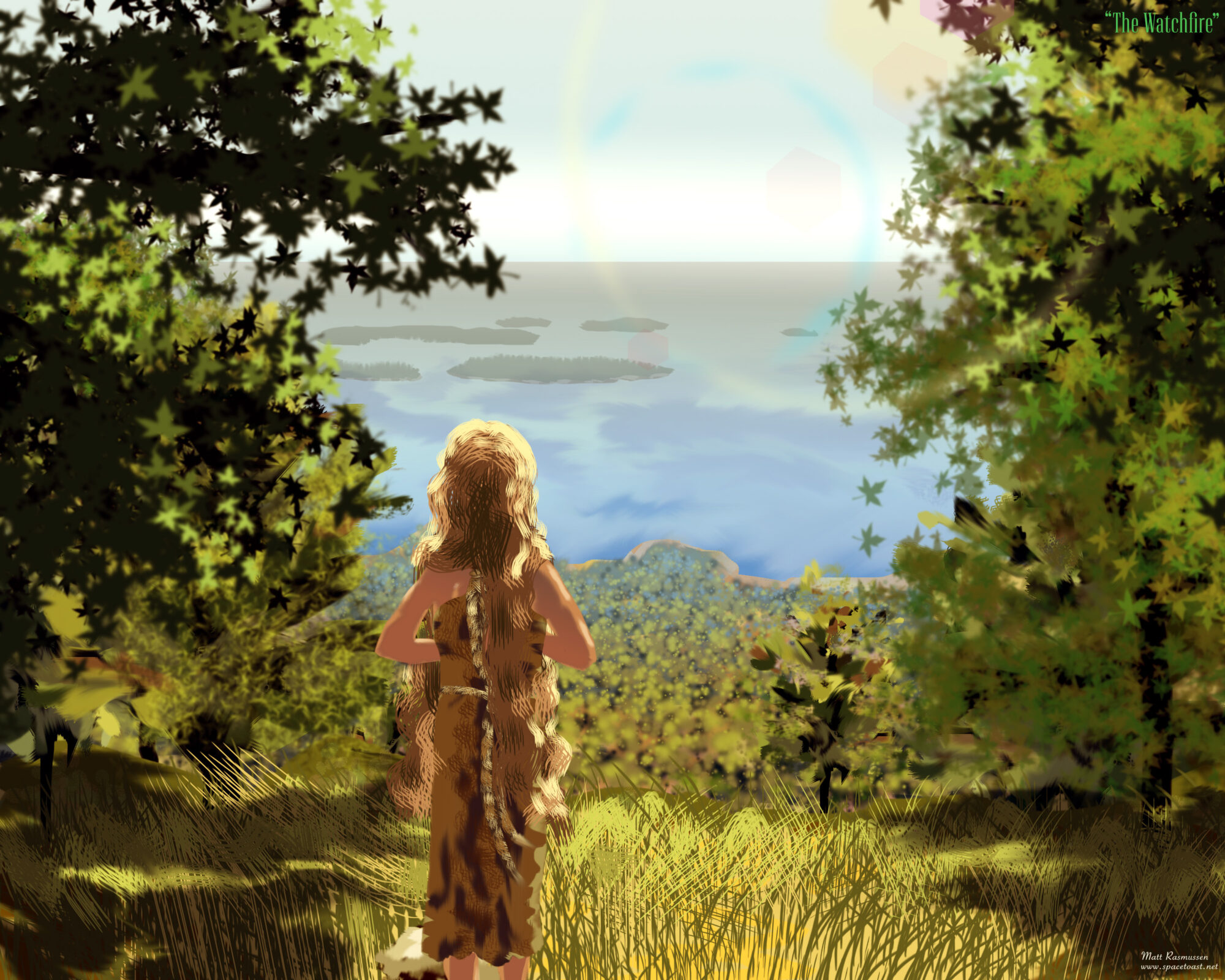
“Its malevolent gravity drags humanity and all human ideas into its orbit, warping them beyond recognition. Beneath it, within its context, everything becomes corrupted into the worst version of itself. It takes joy and turns it into vindictive glee; it takes self-reliance and turns it into solipsistic psychosis; it turns love into smothering assault, pride into humiliation, families into traps, safety into paranoia, peace into discontent. It turns people into people who do not see people as people. And civilisations, ultimately, into abominations.”
-Sam Hughes, There is No Antimemetics Division
This is the moment when Hughes’ novel, I think, reaches beyond high-concept pastiche to truly touch something great. An idea, a meme, so all-encompassing that it doesn’t merely pervade and rot everything it casts its dark light on, but replaces the whole with a new always-was.
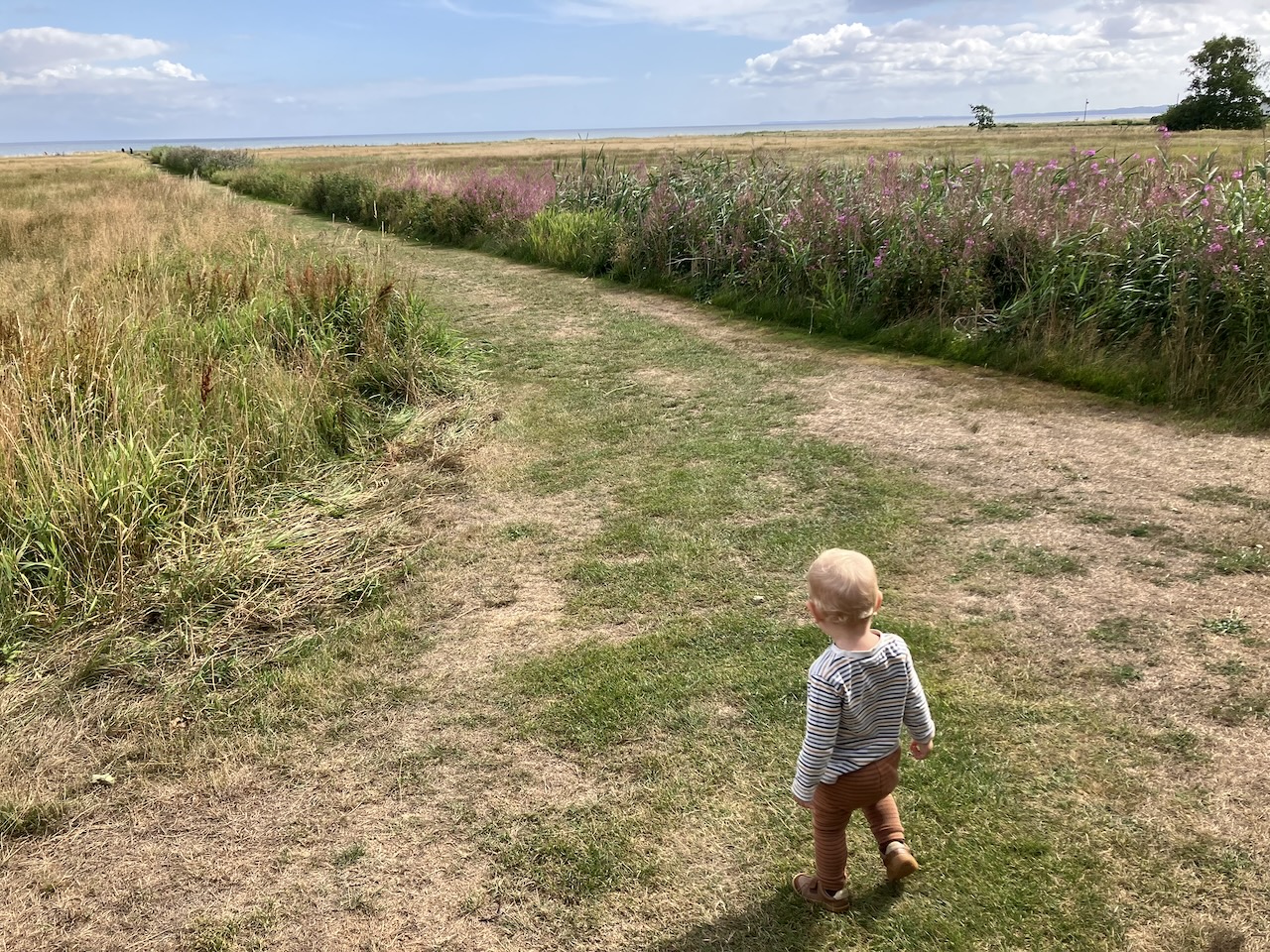
My son is a year and a half old. I’m 45. I’m a different generation than most of my peer-dads. My memetic space is different. My inevitabilities are different.
The technology now exists to “watch” Hugin everywhere he goes. To know everything he reads, watches, plays, experiences. Because WHAT IF THE WORST HAPPENED? Knowing I could have reached for that golden bough, had the knowledge to prevent the worst–and didn’t. What would that make me?
Hugin scraped his knee so it bled, and got a real prize shiner on his forehead, all today. Since daycare. In my care. My philosophy is: cool, good. You should see him climb! He’s an explorer. He’s a mover. He’s a ponderer. He’s a sweet guy. And he’s going to have worse.
We wandered dumbly into surveillance capitalism. A pack of lies from marketing scum sold the world its panopticons: It’s free because your privacy is worth nothing! Simultaneously: With enough data, we can sell people anything! It wasn’t true in either direction. But if we’ve learned anything from Trumpism, it’s that true is a far more fragile and optional meme than a refugee from the 20th Century would have assumed. Easy is a meme. Everyone else does is a meme. I’m busy is a meme. Stressed. I can do this. I can get out of this hole. I just need a little space. There are so many memes louder than true. Surveillance is a legitimate business. That’s a meme.
Like every child, Hugin stands where a torrent of historical winds cross.
I will protect him. I must protect him. To both statements, sometimes yes, but primarily I must raise him.
Previous generations weren’t as free as we assume. Yes, as a child in the 1950s-60s, my mother could go several streets in any direction with her friends, but everywhere was a loose network of housewives and old ladies who knew one another, had their phone numbers handwritten in the back of one-another’s white pages, and kept a keen eye on everyone’s children throughout the day. (My dad, in a much smaller town: Fewer checkpoints, larger geography, same vague system.) My parents always needed to know whose house I was at, in the 1980s-90s (though it helped that they needed to drive me there until 1996).
The difference in the 2020s is twofold.
First, the granularity has increased extraordinarily. My parents couldn’t even see what I checked out from the school library. Parental controls will literally show me everything Hugin examines. The power is heady. The power is corrupting. The power tries to keep a straight face as it smirks, “What if?” That infrastructure wasn’t built for the benefit of my son; it was built for the massive collection and collation of his thoughts. Initially, to sell him things. Now, to shape those thoughts. Have I mentioned that surveillance capitalism is now politics?
The second difference is, in fact, worse. The second difference is internalization. The meme is no longer a meme, it is the whole memetic space. Have you noticed you can now tell the age of someone online by the circumlocutions they use to allude, even vaguely, to anything serious? Suicide, rape, death, sex. Everything is autocorrected away before it even gets from Millennial/Gen Alpha fingers into the device. They are so used to being watched in every space in which they can communicate, at least by a lazy bot, that they self-censor as a reflex, like Soviet peons. (I fear it’s even deeper. I see suggestions that the surveillance-native feels that their inner thoughts are public. The sleepless imperfections of the new parent are pathologized. The schoolgirl crush on a teacher is pathologized. The teenage boy wanting to see nudity is pathologized. Every inner rebellion must be quelled. God I hope I’m wrong.)
This is where ChatGPT would start talking solutions. ChatGPT can fuck off. Free Range Kids has failed as badly as the Sceptics Movement. I don’t know (unintentional Howard Beale voice) what to do. I don’t know what I must do. I only know that we need to name this abomination, give it metaphysical form, before we can manage it. We need to see the meme for what it is: Another flimsy spinning thing of money, monomania and anxiety, demanding to be treated as inevitable, re-internalized, and forgotten.
We need to accept the memetic version of those skinned knees and bonked heads. We need to do better in our own framing of the problems our children face. Giving in to anxiety is just… so… easy now. Dress it up as righteousness, and you never have to think about it again. Perfect.
Or we can parent these amazing kids the hard way. Whatever the fuck that is.