True Horror Subgenres

In the last entry in this series, we defined True Horror genetically. Here we look at its children. Basic genre hybrids like Scifi Horror are out of scope.

Something needs to be set down in writing here: Not being True Horror does not make a work bad. Social media is for rage-bait; this is a blog. Sax Rhomer’s Occult Detective book The Dream Detective is a fun and fascinating work. It’s not True Horror, but so what? No one needs another tutting inner critic.


The Aickmanesque (1960s-1970s) Robert Aickman and Elizabeth Jane Howard resurrected the traditional English Ghost Story along Symbolist lines, creating a distinct form unaccountably disturbing from an inner perspective.

Body Horror (1980s-) Generally credited in its modern horror form to Cronenberg, the subgenre dealing most directly with alteration to the human body, often against one’s will.

Cosmic Horror (1920s-1930s) The most direct attempts to continue in Lovecraft’s style. Blood and violence are largely offscreen, implied or irrelevant, while the insignificance of humanity in a larger order is centered. A narrator lives to tell the tale, carrying an awful burden. Prose are often purple (in imitation of Lovecraft’s imitation of Poe).

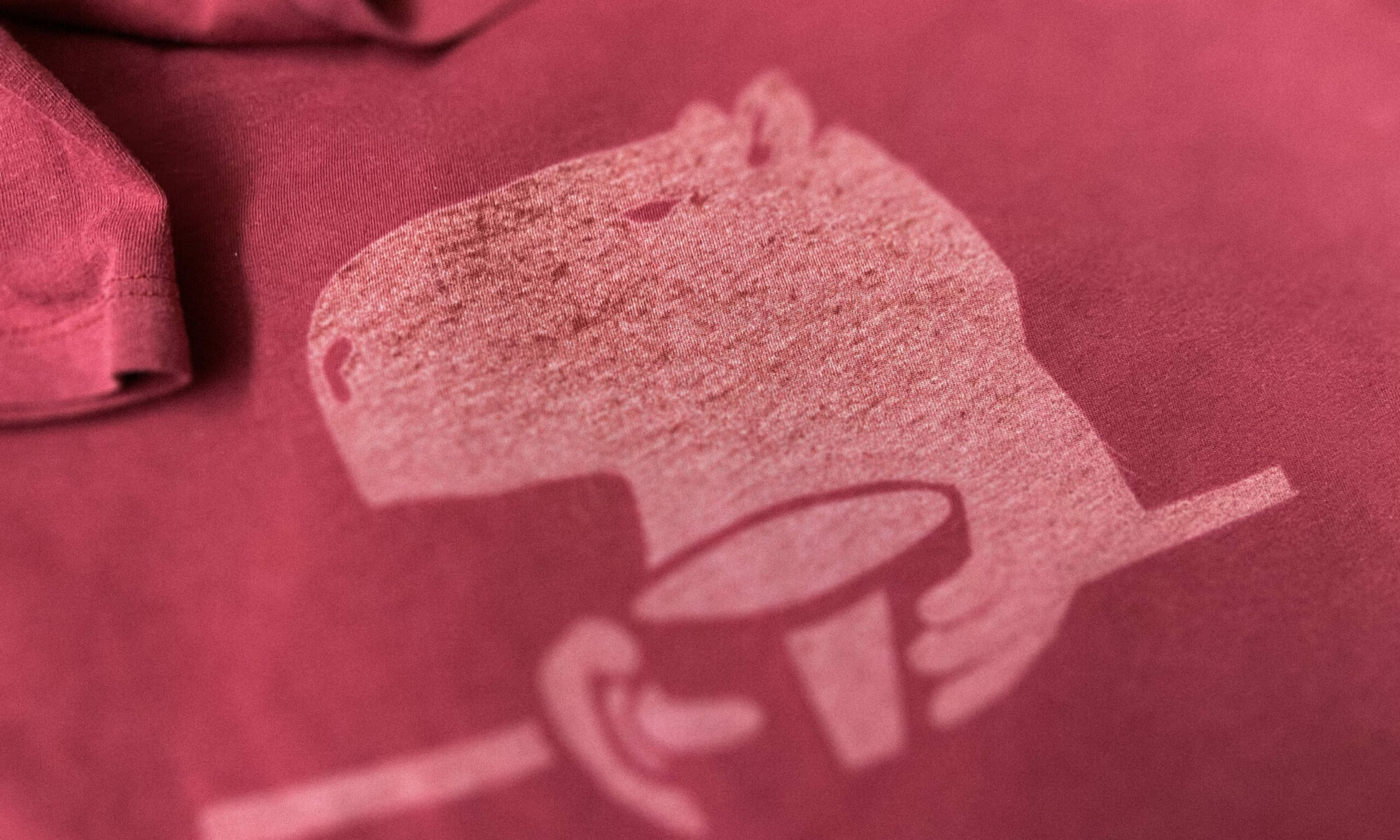
Cozy Horror (1970s-) Horror in which the key elements are at an extreme remove, often shrouded in ambiguity, and human slice-of-life storytelling takes center stage. A controversial classification supported by works like Gene Wolfe’s Peace and the art of rt0no.

Folk Horror (1970s-) An expression of the simultaneous fascination and alienation outsiders hold with the perceived generational continuity, insularity and memetic survival of isolated rural regions. (Outsiders include those from different rural regions.) Generally descends from Margaret Murray’s once-popular witch-cult hypothesis.

Possession (1970s-1980s) An often quite conscious attempt to literally scare people back to religion. The universe is immoral and unknowable if one does not follow.

Psychological Horror (1960s-) Often confused with Psycho-thrillers. To fall within True Horror, the loss of touch with reality at the core of the work must rise to the level of the (implied) supernatural.

Slasher-Horror (1970s-1980s) In its hyphenated form, a Slasher in which the killer is (or killers are) implied to possess invulnerability, omniscience, precognition or other impossible attributes.

Vampire (1910s-2010s) The depredations of the ruling class, often mixed with nativism, at a remove. Coalesced initially from a variety of loosely-related Eastern European folklore traditions, and contemporary anxieties around tuberculosis.

Zombie (1960s-2000s) The only way modern pop culture can deal with the specter of societal collapse. Other desperate human beings are transmuted into mindless, soulless Others, to forgive–even make sport of–their slaughter.

The Woods in Winter

The third Christmas ghost story by Matt Rasmussen

“I tell these things as accurately as I can, and with no theories to blur the history. Theories are poor things at the best, and the bulk of mine have perished long ago.” -W. B. Yeats

Where the houses ended, the woods began. Neither had a name. The houses didn’t merit one, and the woods could not be encompassed by one. The woods were not merely deep–one might think, endless–but defied one’s sense of scale and order. Wonders were meant to cease. Down the very first path lay a cathedral of pines, tall, solemn and breathless, forever dissolving into the faintest haze. Not far along, three chattering falls met like a fleur-de-lis to run laughing away down a narrow, secretive gorge. Above, a hillside rose, so vast and even that the trees seemed to grow sideways. At the top, a great ledge of quartz split apart to form a silent, mossy inner sanctum. Wander deeper and discover more. The wood’s imagination was never exhausted. The only limits were endurance, and how much one’s heart could hold. Spring, summer and fall, all walked the woods as if in a shared dream. But in winter, no one entered the woods.

In winter, when the shadows of the trees stretched toward them even at midday, the houses became lighted bastions. Visits were begun by early dusk, and lasted until the late light of morning. Candles burned in windows all night long. Snug and warm, these were the hilights of the children’s year, the winter sleepovers with cousins and friends. Good things were exchanged: Principally sweets for the kids, knitwear for babies, and alcohol for adults. Parents stayed up late to sing and toast. If snow fell overnight, it was a good sign for the turning of the year.

Martin and his family didn’t live in one of the old houses, whose small-paned windows scraped the very edges of the forest. Their sashes were of wood, not iron. Their walls were plastered brick, not lichened stone. A boy his age needn’t duck under heavy timbers to move from room to room. The path up their garden bore only a single loop, long overgrown. A hawthorn could be found above the hedge gate, but it was only a carving.

Several houses (which his father called new) faced the roundabout, inside of which had grown up a small stand of beech trees, sparse enough that the lights of the facing houses showed clearly through their paper-white trunks. Whether it was a wood or not, it was here that Martin had first seen her.

She was white, pale as the frost on the grass. “I’m your sister,” she’d said. Her breath didn’t show in the cold.

“I don’t have a sister.”

That’s what he would have said, but Martin knew she’d have shot back, “Are you calling me a liar?”

“Why is your face painted like a fox?”

This, too, he hadn’t asked, but it was just as well. “It’s NOT painted,” she’d have replied.

So little had passed between them. Had he said anything at all? He could remember almost nothing. Questions had been answered without being asked.

A boy other than Martin might have wondered how this could be. A boy other than Martin would have been afraid, or cautious, or at least intrigued. A boy other than Martin would have hesitated to tell his mother.

“You shouldn’t have been out past dark,” she said.

Continue reading “The Woods in Winter”